Physical Address
304 North Cardinal St.
Dorchester Center, MA 02124
Physical Address
304 North Cardinal St.
Dorchester Center, MA 02124

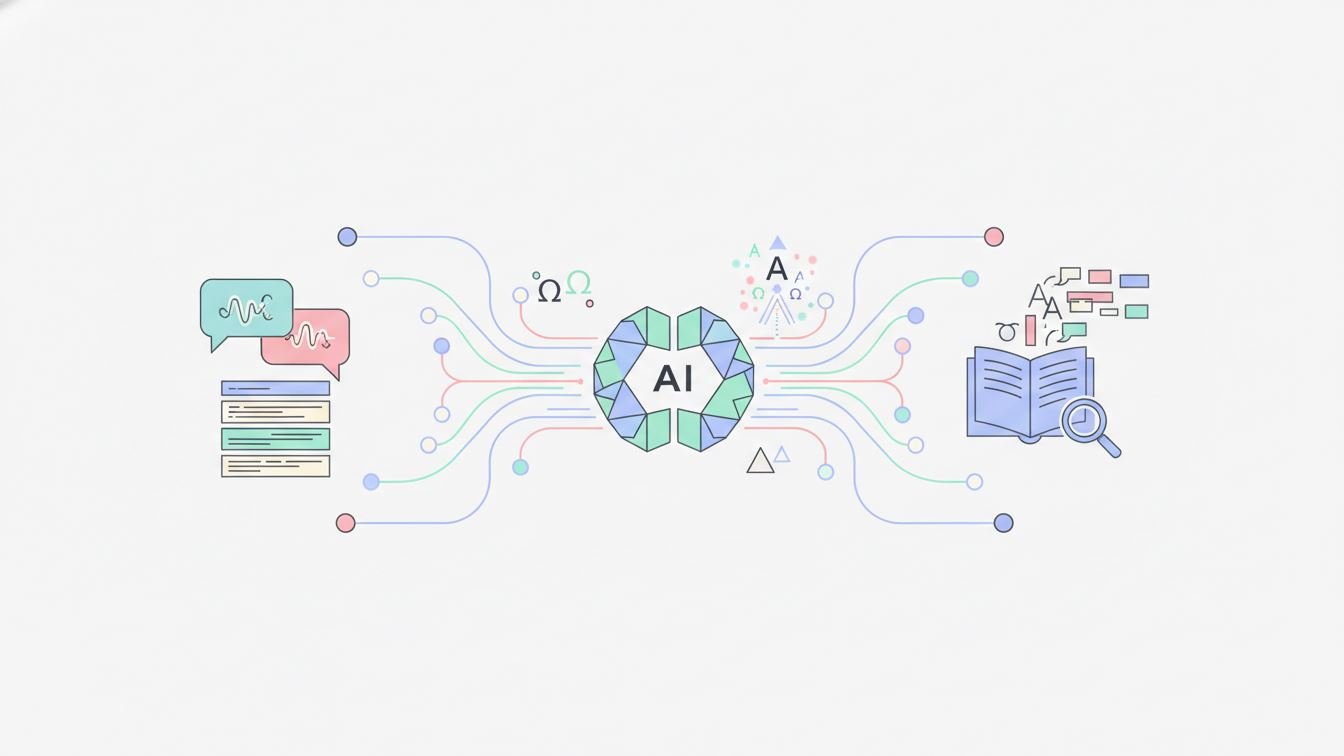
Ever wondered how your virtual assistant understands what you say or how translation apps work so seamlessly? The magic behind these everyday wonders often boils down to Natural Language Processing (NLP). At its core, NLP is about teaching machines to grasp, interpret, and generate human language in a way that feels natural and meaningful.
Despite sounding technical, NLP touches many parts of daily life, from autocomplete features on your phone to sentiment analysis in social media monitoring. Understanding this field is a fascinating glimpse into how computers bridge the gap between code and conversation.
Language is complex—it’s full of nuances, slang, idioms, and varying contexts. For machines, making sense of this requires breaking down text or speech into manageable bits. This process begins with tasks like tokenization (splitting text into words or phrases), part-of-speech tagging (identifying nouns, verbs, etc.), and parsing (analyzing grammatical structure).
From there, NLP systems might use statistical models, machine learning algorithms, or increasingly, deep learning techniques to detect meaning, intent, and sentiment. Think of it like teaching a foreigner not just vocabulary but how to understand jokes or sarcasm—a tricky but rewarding challenge.
Traditionally, NLP relied on handcrafted rules and dictionaries—a painstaking, limited approach. Today, machine learning, especially deep learning with models like transformers, has revolutionized the field. These models train on vast amounts of text, uncovering patterns and relationships humans might not explicitly define.
For example, transformer architectures such as BERT and GPT have transformed NLP by enabling context-aware understanding, meaning they consider the whole sentence or paragraph rather than individual words in isolation. This leads to results that feel surprisingly human.
Whether you realize it or not, NLP powers countless tools we depend on:
NLP doesn’t just make technology smarter—it makes it more accessible and helpful. It helps businesses transform raw text data into actionable insights, enabling better customer service and decision-making. It bridges communication gaps by breaking down language barriers and provides personalized experiences by understanding user context.
Moreover, NLP can assist professionals in various fields: doctors can sift through medical records, lawyers can analyze contracts, and marketers can gauge consumer sentiment—tasks once overwhelming given the sheer volume of data involved.
Despite its advancements, NLP is sometimes thought of as a magic bullet that perfectly understands human language. In reality, it has limitations. Ambiguity, cultural context, sarcasm, and irony can still trip up even the most sophisticated models.
Another misconception is that NLP can work perfectly out of the box for every language or domain. The reality is that models often need fine-tuning or domain-specific training to handle specialized vocabulary or informal speech.
Additionally, privacy concerns around processing sensitive textual information are critical. Ethical NLP development involves transparency and careful data handling.
The trajectory of NLP is exciting. As models become more efficient and data more diverse, the conversation between humans and machines will only grow richer. We’re inching closer to AI that can genuinely understand context, emotions, and even creativity.
Imagine AI that can not only translate language but interpret nuances unique to cultures and individuals—a true partner in communication rather than just a tool.
Natural Language Processing is a vibrant, evolving field that touches countless aspects of modern life. It transforms the way we interact with technology, making machines more intuitive and helpful. While it’s not without challenges, the progress made so far reveals just how much potential there is when computers learn to truly “understand” language.
Next time you chat with an assistant or get content recommendations, you’ll know a bit more about the remarkable AI work happening behind the scenes, quietly turning human words into meaningful action.