Physical Address
304 North Cardinal St.
Dorchester Center, MA 02124
Physical Address
304 North Cardinal St.
Dorchester Center, MA 02124

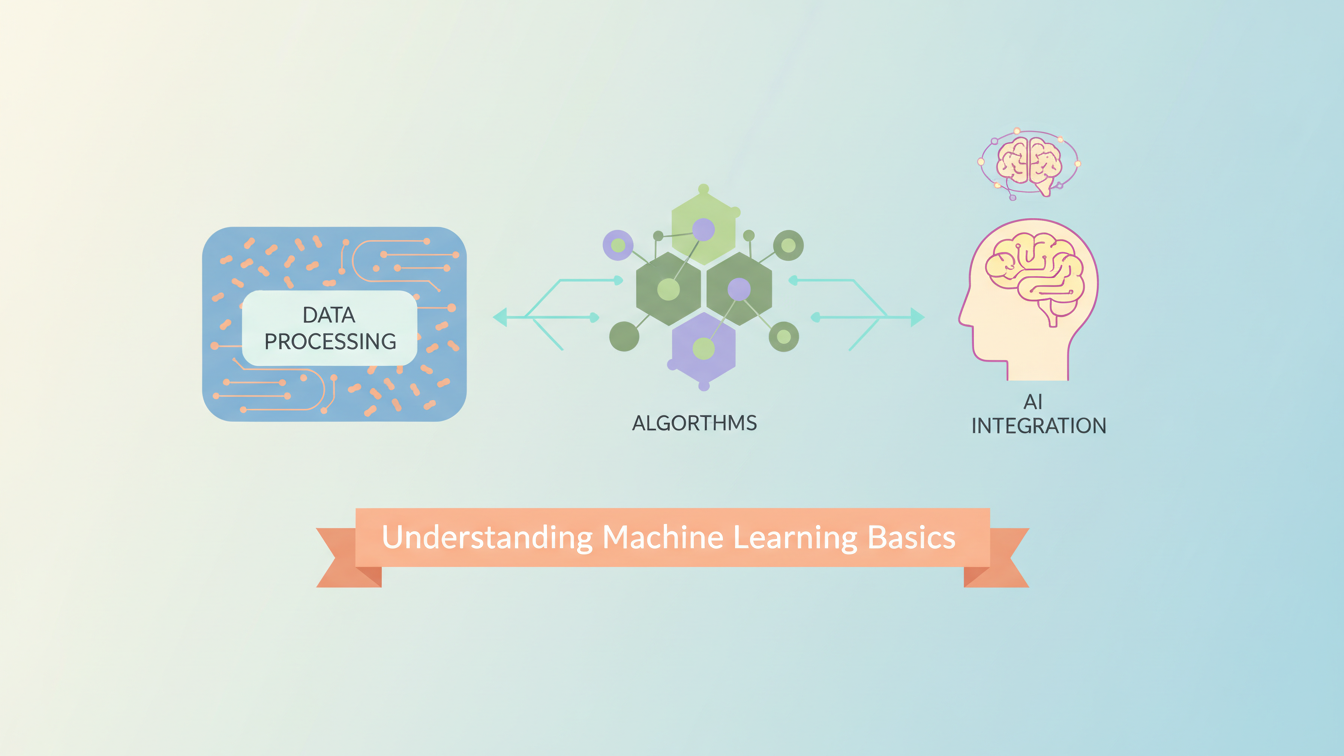
Machine learning often feels like one of those buzzwords you hear tossed around in conversations about tech, business, or even healthcare. But beneath the jargon lies a fascinating field that’s reshaping how computers interact with data and the world around us. At its core, machine learning is about teaching computers to learn from experience—without being explicitly programmed for every single task.
Simply put, machine learning is a subset of artificial intelligence where systems improve their performance through data. Instead of writing rigid instructions for a program, developers provide examples and data, allowing the system to recognize patterns and make decisions. Think of it as training a curious apprentice who learns by exposure, rather than handing them a detailed manual.
While it might sound abstract, the practical implications are huge. From recommending your next favorite song on a streaming platform to detecting fraudulent credit card transactions, machine learning powers many unseen parts of everyday tech.
At the heart of machine learning is data. The more quality data available, the better the system can understand and predict outcomes. This process starts by feeding data into algorithms—mathematical models designed to find relationships and patterns.
But not all machine learning is the same. There are several approaches, each suited to different scenarios:
Once an approach is chosen, the next step is training the model. This phase involves iteratively adjusting the algorithm’s parameters so it can minimize mistakes—often by comparing its predictions with known results. This process can feel a bit like tuning a musical instrument until it sounds just right.
After training, the model is tested on new, unseen data to check how well it generalizes. If it performs well, it can be deployed for real-world use. If not, developers revisit data quality, tweak algorithms, or collect more examples.
Machine learning’s beauty is in its versatility. You encounter it more often than you might realize:
One major advantage of machine learning is its ability to handle complexity and scale. Humans might struggle to sift through massive datasets or detect subtle patterns, but machines excel here. This efficiency translates into smarter products, faster decisions, and innovations that were once the stuff of science fiction.
Moreover, machine learning adapts. It evolves as it encounters new data, often improving over time without explicit reprogramming. This adaptability is critical in dynamic environments where conditions change rapidly.
Despite its impressive capabilities, machine learning isn’t a silver bullet. One common misconception is that more data always means better results. While data is crucial, quality trumps quantity. Poor or biased data can lead models astray, perpetuating errors or unfair outcomes.
Another trap is overlooking the importance of feature selection—deciding which variables truly matter. Feeding irrelevant or noisy features can confuse the model, reducing its accuracy.
It’s also important to recognize that machine learning models can be opaque. Sometimes, it’s challenging to explain why a model made a particular decision, raising concerns in sensitive fields like finance or healthcare.
Machine learning is less about replacing human intelligence and more about augmenting it. As tools that learn from data, these systems can unveil insights and automate tasks that help us focus on creativity, empathy, and complex problem-solving. Embracing this technology with a clear understanding—and a dash of caution—opens doors to possibilities we’re only beginning to imagine.