Physical Address
304 North Cardinal St.
Dorchester Center, MA 02124
Physical Address
304 North Cardinal St.
Dorchester Center, MA 02124

Artificial intelligence has transitioned from a niche scientific curiosity to a pervasive force shaping nearly every corner of modern life. But when people talk about “AI,” they often mean very different things — sometimes the algorithms behind voice assistants, other times the complex neural networks used in self-driving cars. This broad landscape can be confusing, so taking a step back to understand the foundations and scope of AI helps us appreciate both its promises and pitfalls.
At its core, AI is about creating machines or systems that can perform tasks which typically require human intelligence. This includes recognizing patterns, learning from data, making decisions, and even understanding language or images. The journey to this capability hinges on several key ideas and technologies evolving in harmony.
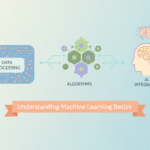
While AI might seem like black magic, it actually arises from some very human strategies—imitating how we learn, reason, and adapt. A few foundational concepts keep popping up.
These components often overlap; for example, deep learning—a subset of machine learning—uses multi-layered neural networks to crunch vast amounts of data more effectively than ever before, enabling breakthroughs in speech recognition or real-time language translation.
Imagine teaching a child to recognize cats. At first, lots of examples are needed: “This is a cat,” “This is not a cat.” Over time, the child identifies patterns—pointy ears, whiskers, a certain shape. Machines follow a surprisingly similar path.
AI systems start with raw data and adjust their internal parameters through training to reduce errors. This trial-and-error process, often powered by massive datasets and computational muscle, helps the system generalize from known examples to new, unseen inputs.
One fascinating aspect is that AI can discover features humans might overlook. For instance, deep learning models can identify subtle patterns in medical scans that may elude radiologists, potentially leading to earlier diagnoses.
Everyday life increasingly involves AI, often invisibly working behind the scenes. Consider these real-world snapshots:
These applications highlight how AI isn’t one monolithic thing but rather a toolkit adapting to diverse fields.
Despite the excitement, AI comes with challenges and common misconceptions. Sometimes people imagine AI as “thinking” machines with consciousness—this is far from reality. Current AI excels at pattern recognition but lacks genuine understanding or common sense.
Another frequent pitfall is expecting AI to solve problems without quality data. Garbage in, garbage out remains true; biased or incomplete datasets can lead to flawed outcomes, sometimes reinforcing societal prejudices.
Additionally, deploying AI responsibly requires awareness about privacy, transparency, and accountability. It’s not just about what AI can do but also what it should do ethically.
The AI landscape is dynamic and expanding, with new breakthroughs appearing rapidly. For businesses, policymakers, and individuals, having a grounded understanding enables wiser decisions—whether it’s adopting AI tools or shaping regulations that protect society while fostering innovation.
AI is a powerful amplifier of human capability, but like any tool, its value depends on how thoughtfully we wield it. Embracing both its potential and its limitations opens the door to a future where human creativity and machine efficiency work hand in hand.