Physical Address
304 North Cardinal St.
Dorchester Center, MA 02124
Physical Address
304 North Cardinal St.
Dorchester Center, MA 02124

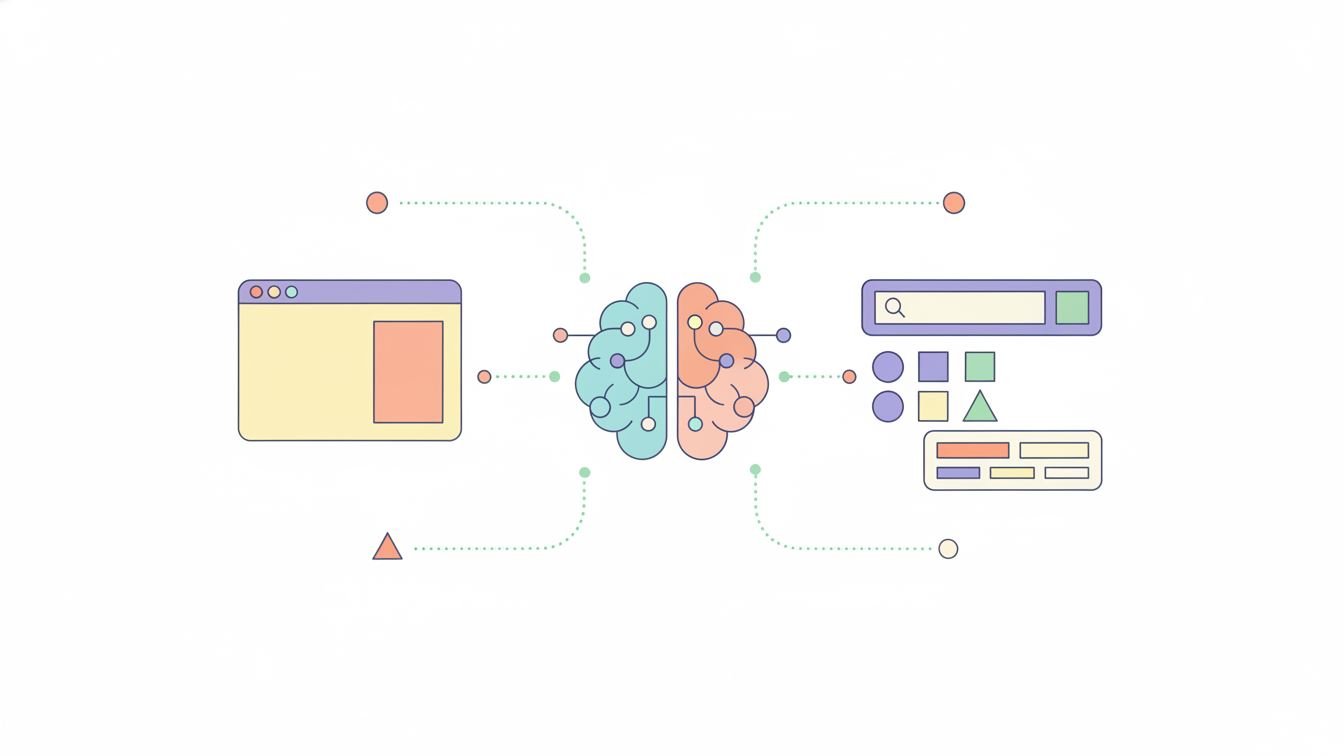
It’s fascinating how AI manages to sift through the endless troves of information on the web and pull out something that resembles understanding. Unlike a human browsing a page, AI doesn’t “read” in the conventional sense. Instead, it processes patterns, structures, and contexts in ways that often surprise even the people who design these systems.
At its core, AI’s task is to transform raw, often messy web data into meaningful, actionable insights. Whether it’s answering your query, summarizing an article, or recommending a product, the underlying challenge is similar: making sense of text, images, and metadata scattered across countless websites.
To give you a clearer picture, let’s break down the journey of web content through AI’s eyes. It begins with understanding the structure of the content — identifying headers, paragraphs, lists, and more. Then, AI delves deeper into semantics, context, and relevance.
Imagine you ask a voice assistant for “best hiking trails near me.” The assistant doesn’t just search for those exact words; it leverages AI models trained on billions of sentences to interpret what “best” means in this context, considers user reviews, geographic data, and even current conditions pulled from the web.
Behind the scenes, several steps occur. First, AI scrapes or accesses web pages, extracting clean text by stripping away clutter like ads or navigation bars. Next, it tokenizes the content — breaking it down into manageable chunks such as words or phrases.
These tokens then pass through layers of AI models geared to detect syntax and meaning. The models look for patterns, such as sentiment or topic relevance, and rank this information for usefulness. The result might be a summarized snippet or a tailored recommendation that feels surprisingly human.
One widespread misconception is that AI “understands” content the way humans do. While AI can mimic comprehension impressively, it operates without consciousness or true insight. It’s pattern recognition, not cognition.
Another pitfall lies in overestimating AI’s ability to handle ambiguity. Sarcasm, idioms, and cultural references often trip up models, leading to misinterpretations. Similarly, AI can be biased by the data it learns from, which means flawed or incomplete web content can skew its outputs.
Understanding how AI processes web content helps us harness its potential more wisely. It enables better content creation, SEO strategies, and user experiences. Businesses can target their audience more precisely by aligning with AI-driven search algorithms.
Moreover, AI unlocks accessibility by translating and summarizing content, making information more reachable for people worldwide. It enhances efficiency, freeing humans from sifting through mountains of data manually.
AI’s journey to comprehend web content is ongoing—a dance where machines learn to decipher our digital footprints bit by bit. While it may never “read” like we do, its growing sophistication brings new opportunities and challenges.
Ultimately, seeing AI as a powerful tool rather than a perfect oracle helps us navigate this evolving landscape with both excitement and caution.