Physical Address
304 North Cardinal St.
Dorchester Center, MA 02124
Physical Address
304 North Cardinal St.
Dorchester Center, MA 02124

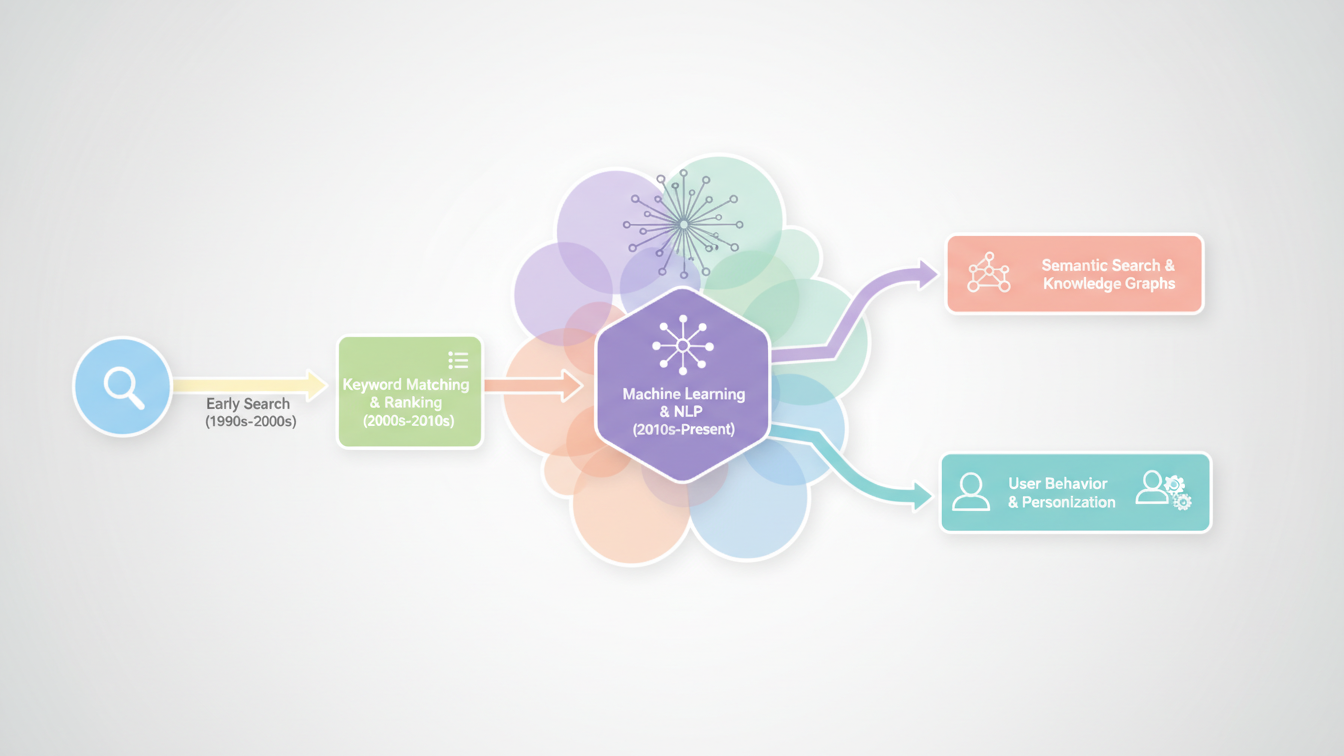
It’s fascinating to think about how a seemingly simple Google search today is actually the result of decades of innovation and evolving technologies. The history of AI in web search is not just a tech tale; it’s a story about how machines learned to understand human intent better and deliver increasingly relevant results. Back in the early 1990s, search engines were rudimentary, relying mostly on keyword matching without much context. But as the web expanded exponentially, it became clear that smarter, more nuanced approaches were needed.
The introduction of AI marked a turning point. Artificial Intelligence, broadly speaking, involves machines mimicking cognitive functions like learning and problem-solving. When applied to web search, AI helped elevate search results from simple keyword grabs to more sophisticated, context-aware responses.
In the earliest days, search engines operated on straightforward algorithms—matching typed queries literally with web pages containing those keywords. This approach, while effective on a small scale, struggled with ambiguous or complex queries. Enter AI-powered techniques like natural language processing (NLP), which enabled machines to parse the meaning behind a user’s words.
NLP revolutionized search by allowing engines to interpret synonyms, grammatical structures, and even user intent. For example, if you typed “best places to eat near me,” AI could understand you weren’t just interested in generic food information but specifically local dining spots. This leap was possible because machine learning models began training on vast datasets of human language, learning patterns and nuances.
At its core, AI in web search employs a variety of techniques that make sense of queries and rank content more effectively. Machine learning algorithms analyze historical search data, user behavior, and content characteristics to predict what results will satisfy a particular query.
One practical example is Google’s RankBrain, introduced in 2015, which uses AI to process unfamiliar queries by finding related concepts and improving the ranking of search results. It was a major step toward making search engines more intuitive and less rigid.
The benefits of integrating AI into web search ripple far beyond the technology itself. For users, it’s about convenience and receiving helpful information quickly. Imagine searching for medical symptoms or travel advice—you want dependable, relevant answers without wading through irrelevant pages.
For businesses, AI-driven search transforms how they connect with customers. Optimizing content for AI-enhanced search engines means focusing on quality, context, and user intent rather than just keyword stuffing. This shift has encouraged a more human-centric approach to content creation, elevating overall online experiences.
Despite the hype, AI in web search isn’t magic. Some still assume search engines “understand” language perfectly, but AI models interpret based on probabilities and patterns learned from data—not genuine comprehension. This can sometimes lead to quirks or errors, especially with ambiguous or rare queries.
Another misconception is that AI instantly personalizes results with perfect accuracy. While personalization is powerful, it must balance relevance with privacy considerations. Over-personalization can potentially create echo chambers that limit exposure to diverse perspectives.
The journey of AI in web search is far from over. We see promising advances such as multimodal search that blends text, voice, and images, and conversational AI that enables more natural back-and-forth interactions. These technologies might soon make search feel more like a dialogue than a one-off query.
As AI continues to evolve, one takeaway remains clear: Successful search engines will be those that combine raw computational power with an empathetic understanding of human communication. This balance makes searching the web smoother and more meaningful for everyone.
Looking back, AI’s integration into web search shows us a clear progression from simplistic keyword matching to complex semantic interpretation. Each innovation reflects a step closer to machines that not only process data but also grasp what users are truly seeking.
For anyone interested in the fundamentals of AI and the digital landscape, the history of AI in web search offers a vivid example of how technology, data, and human needs come together. As users or creators, appreciating this evolution helps us navigate and shape the future of online information.