Physical Address
304 North Cardinal St.
Dorchester Center, MA 02124
Physical Address
304 North Cardinal St.
Dorchester Center, MA 02124

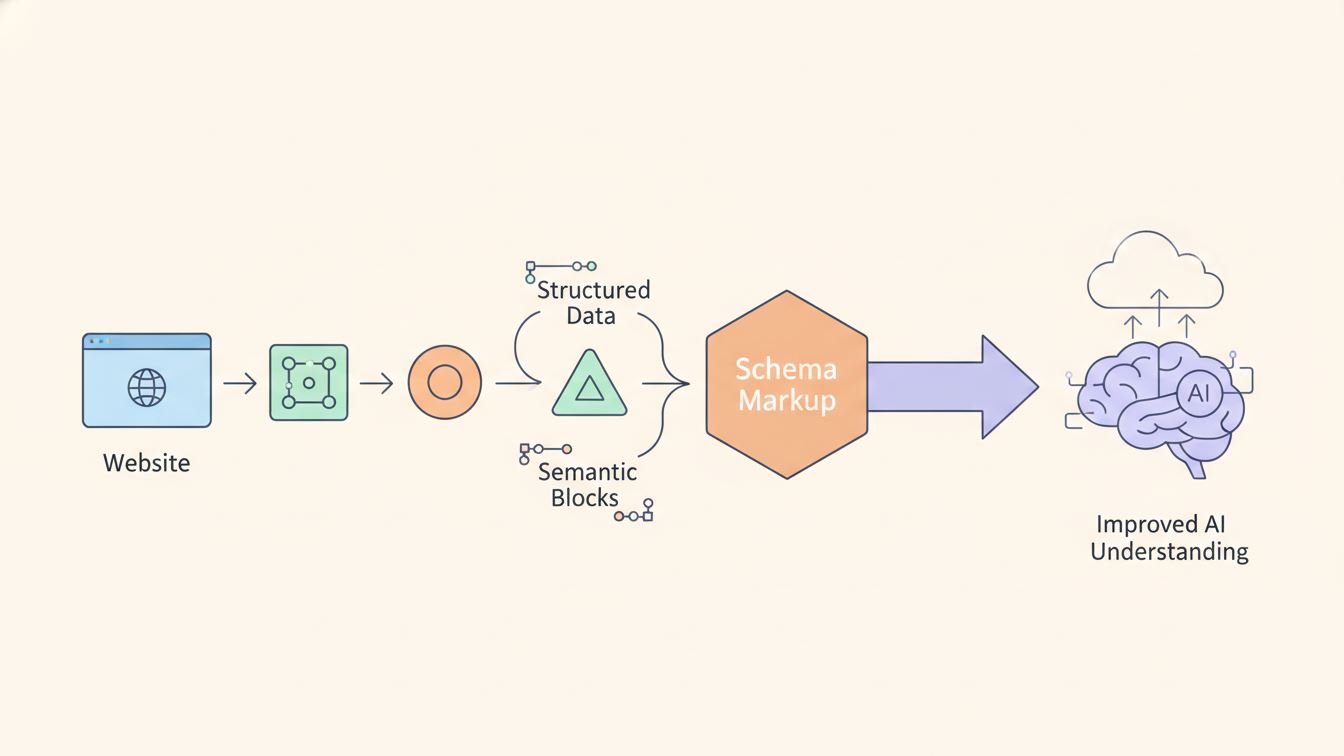
If you’ve dipped your toes into SEO or web development lately, the term “schema markup” has likely crossed your path. But beyond being just another technical jargon, schema markup plays a vital role in helping AI systems—and by extension, search engines—comprehend the content of a website with greater accuracy. This isn’t just about boosting rankings or sprucing up snippets; it’s about making your information more accessible and meaningful to machines that shape the digital experience.
At its core, schema markup is a type of structured data, a way to annotate your HTML so that machines can identify and categorize the elements on your page. Think of it as a translator between your human-readable content and AI’s language. Without it, AI scrapes through raw text and metadata, trying to make sense of context, relevance, and relationships, often relying on statistical guesses. With schema, you give the AI a roadmap.
Schema.org, a collaborative initiative by major search engines like Google, Bing, and Yahoo, provides the vocabulary for this structured data. You embed these annotations directly into your HTML, specifying details about things such as articles, products, events, people, reviews, and much more.
When an AI-powered crawler, say Googlebot, scans your site, it looks for this structured data to get a clearer and more explicit picture. For example, if you mark up a recipe, you aren’t just providing a block of text but clearly outlining ingredients, cooking time, nutrition facts, and user ratings. This helps AI understand what the page is about in a nuanced way rather than treating it as a plain article.
Combine these, and you create a structured snippet that AI can parse to understand context, intent, and relationships within your content.
Let’s imagine you own an online bookstore. Without schema markup, search engines see just a list of book titles, descriptions, and prices. With schema markup, you can explicitly convey details like the author, ISBN, publication date, reviews, and even availability.
This clarity can translate into enhanced search results like rich snippets—those extra eye-catching visuals and information directly in search listings, such as star ratings or price ranges. It’s not only more appealing to users but also helps AI categorize and rank your content more effectively.
Another example is local business schema. For restaurants or service providers, marking up your address, opening hours, and menus means virtual assistants or AI systems can confidently answer questions like, “What restaurants near me are open now?” with precise, trustworthy data.
While structured data certainly aids in search engine optimization, the advantages extend deeper, especially as AI becomes more integrated into how information is consumed:
Even seasoned developers sometimes trip when implementing schema. Here are a few pitfalls to avoid:
As AI continues to mature, the way it digests web content will become more sophisticated. While natural language processing has made huge strides, structured data remains a cornerstone for precision and clarity. The better you communicate with AI through schema, the more likely your content will be accurately understood, surfaced, and trusted.
Think of schema markup not just as a technical add-on but as an essential dialogue with the machines that increasingly mediate how users discover and interact with your information. Investing the time to implement it thoughtfully is a move with long-term dividends—not just for SEO but for how your content lives and breathes in the AI-powered ecosystem.