Physical Address
304 North Cardinal St.
Dorchester Center, MA 02124
Physical Address
304 North Cardinal St.
Dorchester Center, MA 02124

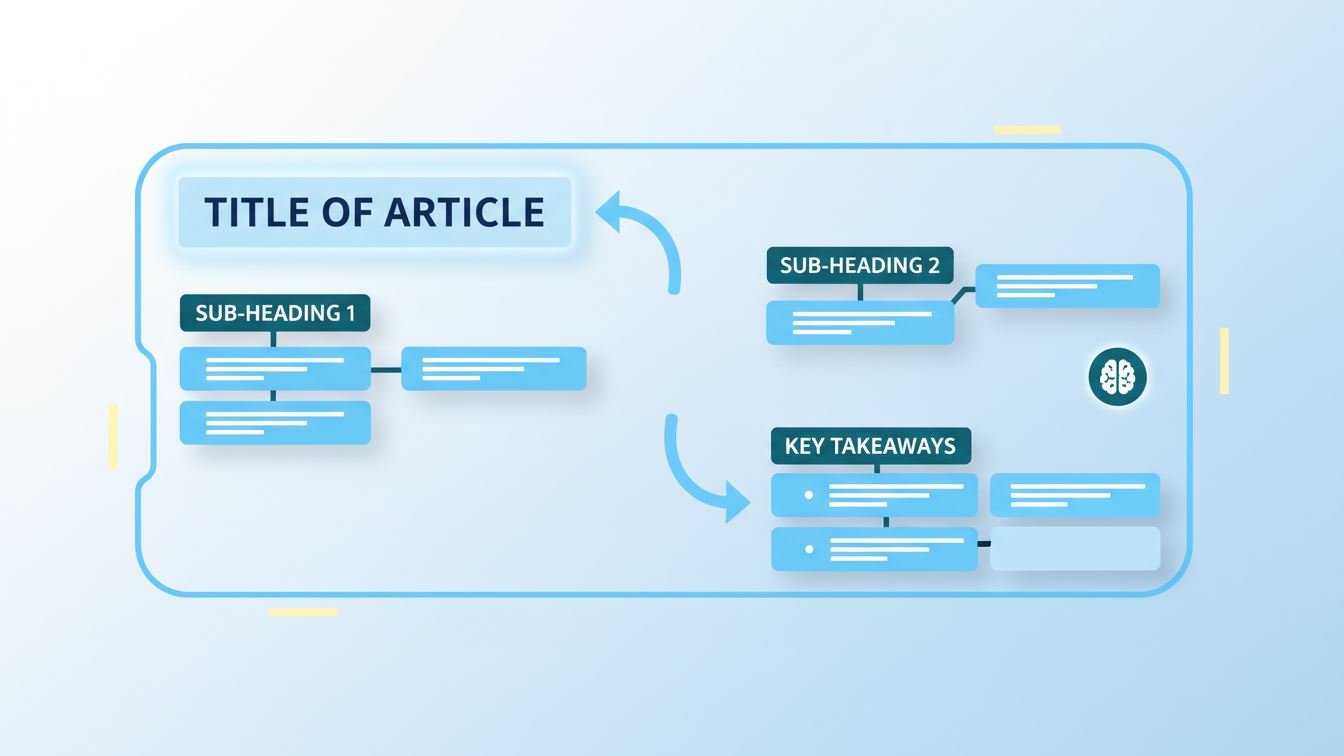
In today’s digital landscape, content isn’t just crafted for human readers anymore. Increasingly, AI systems are the first to encounter, interpret, and even evaluate the material we create. This shift means an article’s internal structure plays a pivotal role in how intelligible and accessible the content is — not just for people, but for algorithms too.
When you think about it, AI doesn’t read articles like we do. It parses, categorizes, and analyzes patterns within the text based on structure and semantic clues. Therefore, well-organized articles, marked with clear headings and logically flowing paragraphs, allow AI to extract meaningful information effortlessly.
At the core, AI systems rely heavily on semantic understanding — recognizing relationships between words, the hierarchy of information, and contextual signals. This is where the structure becomes much more than just an aesthetic choice; it’s a roadmap for AI.
Headings serve as signposts, indicating topics and subtopics. They help AI distinguish between main ideas and supporting details. Meanwhile, paragraphs frame thoughts coherently, ensuring the AI can segment chunks of information properly rather than wading through an unbroken stream of text.
Additionally, lists — whether ordered or unordered — are powerful tools. They help to break down complex concepts, making relationships and hierarchies explicit. For an AI, this clarity supports quick parsing and better context retention.
Imagine you’re telling a story to a friend. You wouldn’t just blurt out everything at once; you’d start by setting the scene, introducing characters, then moving through events. Similarly, AI uses structural cues to build a mental model of the article’s content.
For example, when an AI encounters a heading like “Benefits of Structured Content,” it anticipates the following text to discuss advantages. If the subsequent paragraphs explain those benefits clearly and concisely, the AI can efficiently map these points, improving indexing and even snippet generation for search results.
Moreover, clear use of subheadings, bullet points, and concise paragraphs reduce ambiguity. Ambiguity, if left unchecked, can confuse AI, causing it to misinterpret the content or dilute key messages.
It’s not just about sprinkling headings everywhere. Thoughtful planning is key. Begin by outlining your article’s top-level themes; assign each a clear <h2>. Use subtopics within those sections marked by <h3> tags. This hierarchical approach mimics the way AI algorithms are designed to process nested information.
Keep paragraphs focused — one idea per paragraph tends to work best. This clarity reduces cognitive load for both readers and machines. When listing information, decide between bulleted or numbered lists based on whether the sequence matters.
Also, avoid overly long paragraphs. Blocks of text can feel intimidating to human eyes and become less digestible for AI, which depends on breaks to parse distinct thoughts.
Consider an article about “Urban Gardening.” If the content flows from an introduction straight into detailed planting instructions without subheadings or clear separation, AI might struggle to identify where one concept ends and another begins. The result? Potential loss of content granularity in search engines.
Conversely, an article structured with headings like “Why Urban Gardening Matters,” “Choosing Your Plants,” and “Step-by-Step Planting Guide” provides clear partitions. Such a format helps AI isolate relevant sections, improving the chances of those snippets appearing in voice search answers or featured snippets.
Well-structured articles drive better SEO results. Because AI algorithms, including those behind major search engines, prioritize content they understand well, your chance of ranking higher increases. Structured content is more likely to be featured in rich answers, knowledge panels, and snippet boxes.
Beyond SEO, this approach enhances accessibility tools — like screen readers — which rely on semantic HTML to provide meaningful navigation for visually impaired users. This not only broadens your audience but aligns with inclusive content best practices.
For content marketers, structured articles reduce bounce rates and improve user engagement since readers quickly find what they need. In environments where AI powers chatbots or digital assistants, your well-organized content can feed into better, more accurate responses.
Despite its importance, many creators still fall into pitfalls:
<h2> and <h4> without proper order can disrupt the AI’s comprehension flow.These mistakes don’t just hurt AI interpretation; they degrade the overall reading experience.
Structuring articles for AI understanding isn’t about sacrificing creativity or voice. It’s about harmonizing your content’s natural flow with a format that helps machines help you. When done well, this balance results in articles that are easier to navigate, digest, and share — benefiting readers and algorithms alike.
As AI continues evolving, the importance of semantic clarity and thoughtful structure will only increase. Embracing these principles today not only boosts your SEO but future-proofs your content for the broader AI ecosystem emerging on the horizon.