Physical Address
304 North Cardinal St.
Dorchester Center, MA 02124
Physical Address
304 North Cardinal St.
Dorchester Center, MA 02124

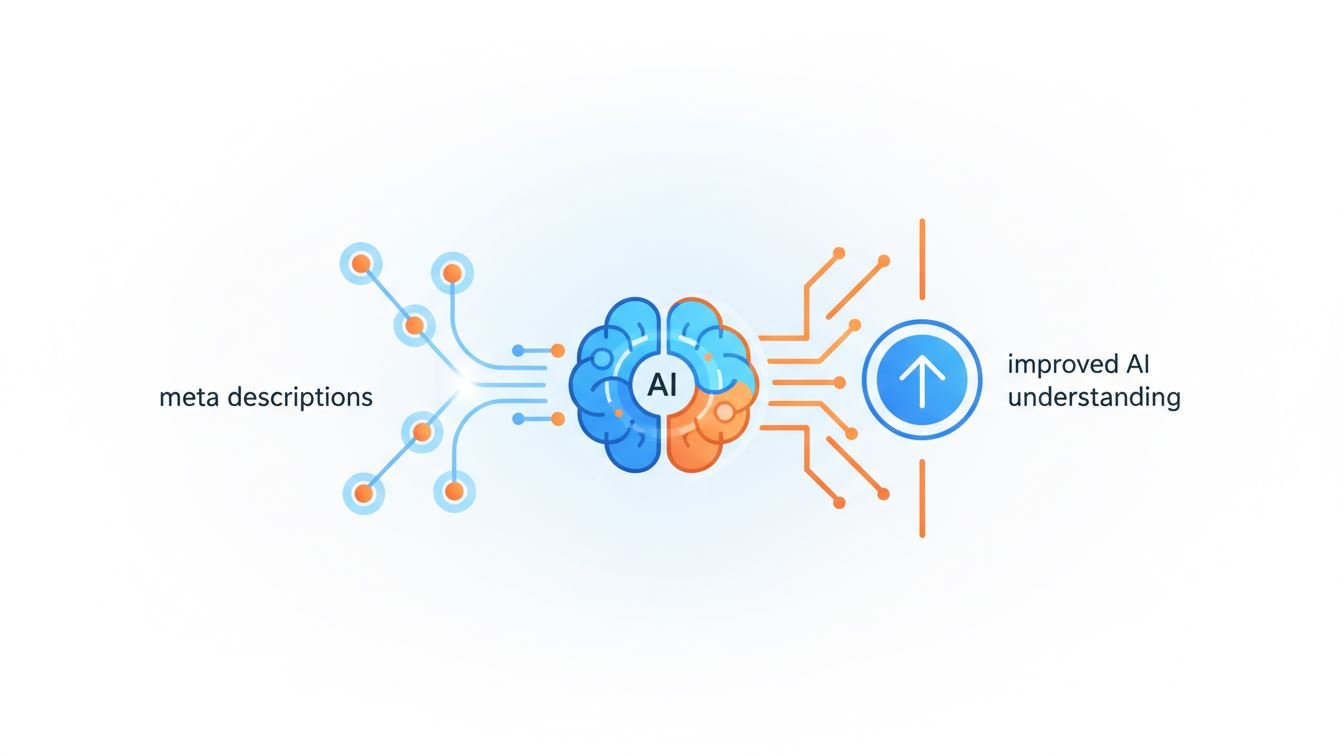
Meta descriptions often fly under the radar in discussions about SEO and content optimization. They’re those little snippets that appear under a page title in search results, designed to briefly summarize what the content is about. But beyond their traditional role in enticing clicks, meta descriptions have grown in significance for AI understanding and content processing.
With AI-powered search engines and virtual assistants increasingly interpreting content semantically, crafting thoughtful meta descriptions has become a subtle yet powerful tool for optimizing how AI “reads” your pages. It’s not just about keyword stuffing anymore; it’s about clear, meaningful signals that frame the content’s intent from the outset.
At their core, meta descriptions provide context. When AI systems crawl and index pages, they use metadata to resolve ambiguity and infer topical relevance. A well-written meta description acts as a concise summary, helping the AI understand what the page’s focus really is. This is particularly important for pages covering complex or nuanced topics where a straightforward title may not suffice.
Think of meta descriptions as a quick intro that orients AI algorithms, allowing them to better match user queries with your content. While AI models do parse the full text, the meta description offers a distilled essence that can influence snippet generation, ranking signals, and even voice search responses.
Consider two pages about “organic gardening.” One has a meta description stating: “Tips for planting and growing organic vegetables in your backyard.” The other simply reads: “Learn about gardening.” Search engines and AI will favor the first because it gives a precise subject and actionable focus. It uses specific phrases like “organic vegetables” and “planting,” which help machines connect the page to related queries.
On the flip side, a meta description stuffed with keywords or overly verbose copy can confuse AI models. For instance: “Organic gardening, growing plants, vegetables, sustainable, backyard, soil, compost, tips, tricks,” reads like a laundry list rather than a coherent summary.
While improved rankings are a fantastic bonus, meta descriptions optimized for AI understanding offer additional value. For instance, they can improve the quality of rich snippets displayed in search results, making your listing more appealing and trustworthy. Also, in voice search, where concise answers are crucial, a well-crafted meta description can increase the chance your content is read aloud.
Moreover, these descriptions act as a feedback mechanism: if you consistently see click-through rates lagging despite good rankings, tweaking your meta description can better align expectations with what your content delivers.
Meta descriptions might be small in size but are mighty in influence, especially as search engines and AI tools get smarter. They offer a bridge between human language and machine interpretation, helping your content not just be found but truly understood.
By treating meta descriptions as an integral part of your content strategy—crafted thoughtfully and updated regularly—you signal to AI exactly what your content stands for. This clarity benefits not only search rankings but also user satisfaction, making your pages perform better in a world where machines increasingly mediate our information discovery.