Physical Address
304 North Cardinal St.
Dorchester Center, MA 02124
Physical Address
304 North Cardinal St.
Dorchester Center, MA 02124

When you glance at a website’s address bar, you might not give much thought to the string of words and symbols there. But behind those URLs lies a fundamental piece of your site’s architecture that can shape how users navigate your content—and how search engines understand your pages.
Creating clear URL structures isn’t just an SEO buzzword. It’s about crafting an intuitive path for both visitors and crawlers, helping everyone make sense of where they are and where they can go next. Good URLs tell a story, and when done right, that story becomes a roadmap to your content.
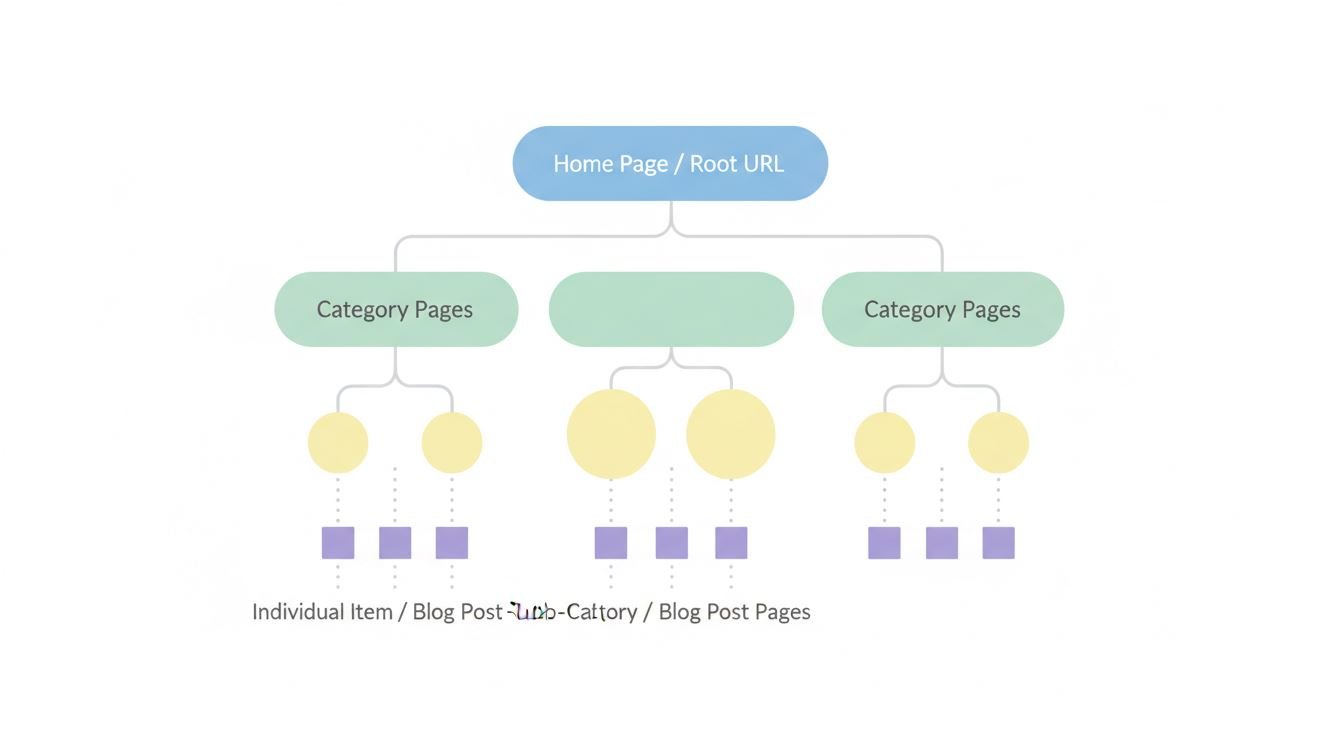
At its core, a clear URL structure is concise, descriptive, and predictable. It’s a consistent framework that organizes your website’s pages in a logical hierarchy.
example.com/gardening/roses versus something like example.com/page?id=12345.example.com/blog/seo-tips, where blog is the main category.Imagine you’re looking for a specific recipe on a cooking site. If the URL reads example.com/recipes/desserts/chocolate-cake, it immediately signals where you are on the site and what you can expect. The hierarchy is clear: recipes, then desserts, then a specific chocolate cake recipe.
Search engines use this hierarchy too, interpreting the relationship between pages and categories. When your URLs mirror your site’s content organization, it helps Google and others understand your content themes and topical focus more deeply.
Consider an ecommerce site selling clothing. A poorly structured URL might look like:
example.com/product?id=9876
This provides no clues about the product itself or its category. Meanwhile, a better URL could be:
example.com/women/dresses/summer-floral
This version reveals the category hierarchy (women → dresses) and the specific product (summer floral), improving both user experience and SEO.
It’s easy to slip into mistakes that muddy your URL clarity. One frequent issue is overcomplicating URLs with unnecessary parameters or session IDs, making them long and confusing.
Another is inconsistency — mixing URL styles or formats across the site. This can lead to duplicate content problems and dilute your SEO efforts.
A subtle but critical mistake is ignoring case sensitivity or language localization in URLs, which can frustrate both users and search engines.
Some site owners believe cramming every possible keyword into a URL will boost rankings. In reality, it leads to clunky URLs that don’t provide additional value and might even hurt your credibility. Think of URLs as signposts, not billboards.
In the end, clear URL structures aren’t simply a technical task—they’re about communication. They tell your visitors where they are and guide them smoothly through your content. They also signal to search engines how your site is structured and what matters most.
By investing time in crafting URLs that are simple, logical, and meaningful, you’re not just helping your SEO—you’re making your website more welcoming and easier to navigate. And in today’s digital landscape, that’s a winning strategy worth every minute.