Physical Address
304 North Cardinal St.
Dorchester Center, MA 02124
Physical Address
304 North Cardinal St.
Dorchester Center, MA 02124

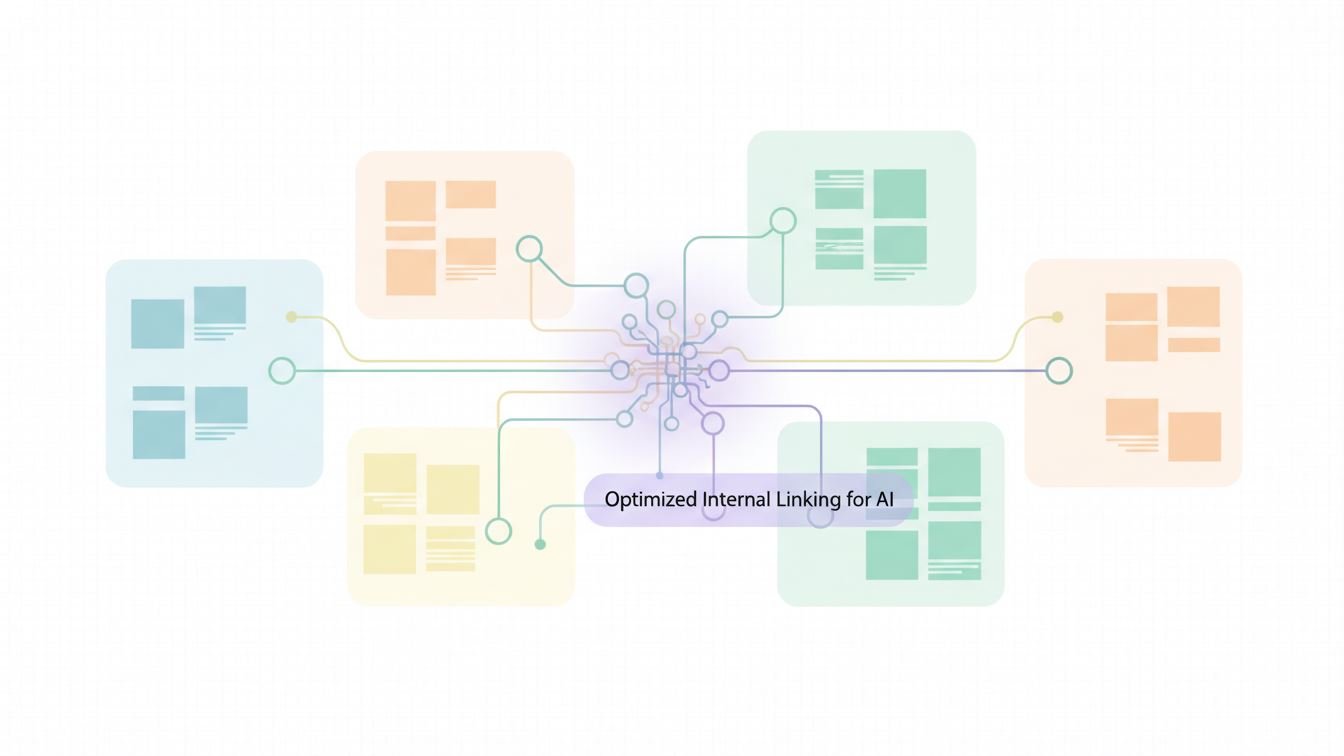
When you think about SEO strategies, internal linking might not be the first thing that jumps out. But as AI increasingly shapes how search engines understand and rank content, the role of internal links becomes more nuanced — and essential. These links don’t just help users navigate your site; they provide critical signals that help AI algorithms grasp the structure and relevance of your pages.
In this article, we’ll explore how AI-friendly internal linking enhances site architecture, boosts SEO performance, and helps your content reach its full potential.
At its core, internal linking connects different pages within the same website through hyperlinks. But it’s not simply about creating a web of clickable paths. Each link acts like a highway for search engines and users alike, pointing not only to where to go next but also implying the relationship between pages.
AI-powered search engines, with their advanced natural language processing capabilities, assess these link structures to determine topical relevance and authority flow. This understanding helps them decide which pages deserve more prominence in search results.
Modern AI doesn’t just count links. It conceptualizes the relationships behind them. When a page links to another with relevant anchor text, the AI infers that the two pages share a meaningful connection. This helps build semantic clusters that organize your content more effectively.
Imagine a recipe blog where a post about “gluten-free baking” links to another about “alternative flours.” That signal tells AI these topics belong to the same content family, increasing the likelihood that the site will rank well for gluten-free baking-related queries.
Consider a travel website with pages on destinations, travel tips, and hotel reviews. Instead of random linking, it’s smart to link the “Paris travel guide” page to “best hotels in Paris” and “top sights in Paris.” Using anchor texts like “best Paris hotels” or “must-see Paris attractions” paints a clear picture for AI.
This approach signals thematic relevance and helps AI cluster content intuitively, making the site easier to crawl and understand.
Despite its importance, internal linking is often done haphazardly. One common mistake is overloading pages with too many links, which can dilute the value of each link and confuse AI models. Excessive linking can also frustrate users, making navigation less intuitive.
Another misconception is that every page deserves equal internal link attention. In reality, prioritizing your highest-value content with focused internal links helps AI and users recognize what matters most.
Using generic anchor texts like “click here” or “read more” is another missed opportunity. They don’t offer meaningful clues to AI about the linked page’s content, weakening the semantic signals your site sends.
Focus on linking naturally within your content, emphasizing relevancy. Quality beats quantity every time. The goal isn’t to create a labyrinth but to build clear pathways that both AI and visitors appreciate.
Internal linking is a subtle art, amplified by the power of AI. By thoughtfully connecting your pages, you’re doing more than just helping users find what they need — you’re feeding search engines the semantic breadcrumbs they seek to understand your site deeply.
In an SEO landscape evolving alongside AI, internal linking remains one of the most straightforward yet impactful ways to enhance site architecture. When done right, it sets the foundation for improved rankings, a better user journey, and a stronger online presence.